AI Integration in Product Design
Role: Senior Product Designer
Duration: 6 months
Organization: Verizon
Context Leadership prioritized AI adoption across design workflows to enhance productivity and align with organizational technology initiatives.
Approach
Implemented and evaluated multiple AI-assisted design processes to assess their practical viability and impact on design quality and efficiency.
AI Integration Experiments
1. AI-Generated Heuristic Analysis
With extended review cycles (2-3 weeks between design critiques), I explored using AI to generate interim heuristic evaluations at key design milestones to maintain stakeholder visibility and facilitate feedback.
- Addressed gap in feedback cadence during extended review periods
- Generated screen-level heuristic analyses for stakeholder review
- Provided supplementary evaluation between formal design reviews
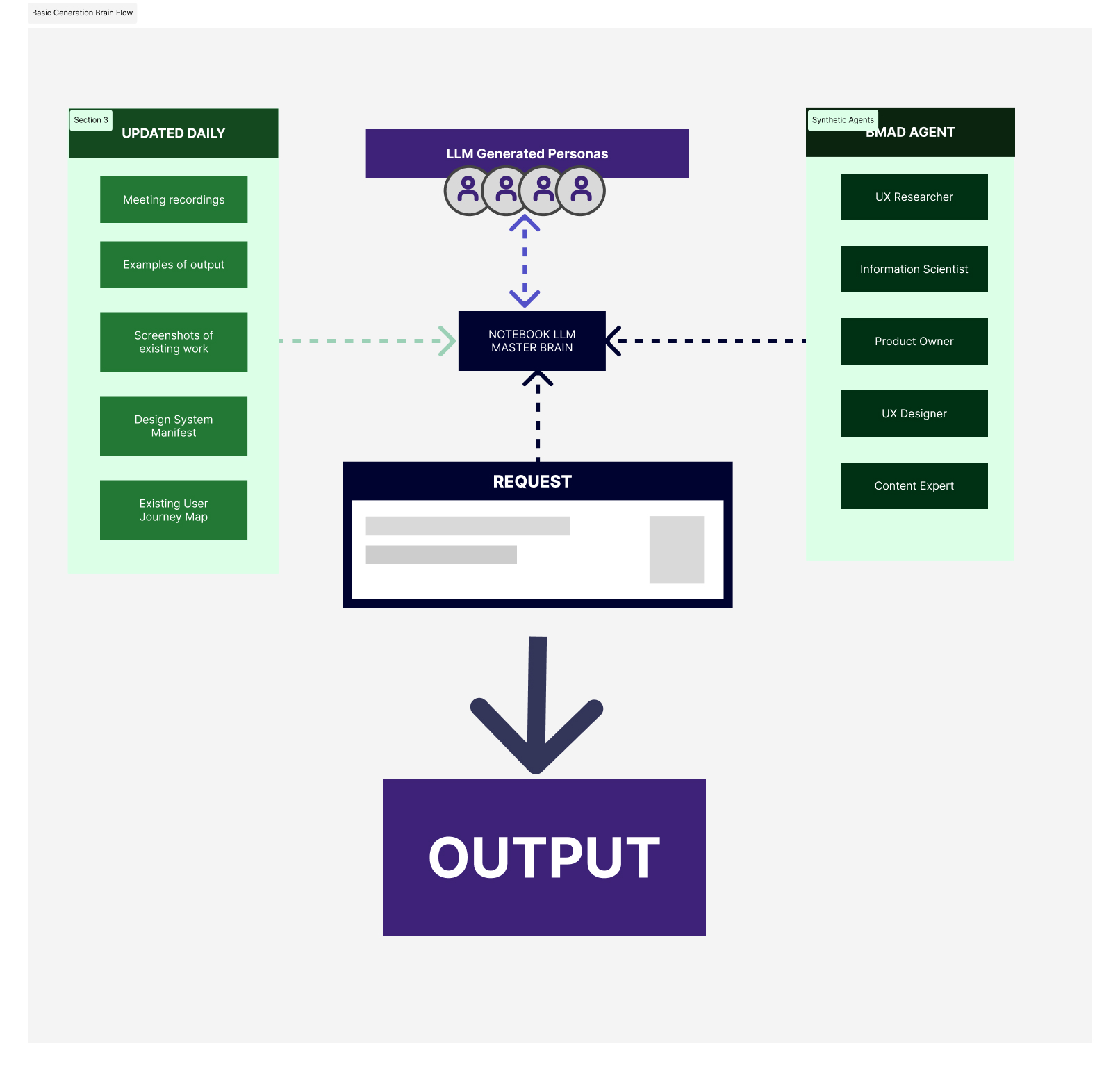
2. AI-Assisted Persona Development
In the absence of established user personas, I explored AI-generated personas to establish a shared user understanding and guide design decisions with rapid persona development.
- Generated foundational personas to address immediate project needs
- Iteratively refined personas based on stakeholder feedback and project insights
- Created lightweight user models for rapid design alignment
3. AI-Driven Design Ideation
Evaluated Figma automation and Google Gemini for rapid concept generation to increase design iteration velocity. The objective was to explore more design directions within the same timeframe.
- Generated multiple design concepts from consolidated project requirements
- Assessed output quality against manual design standards
- Measured time investment: AI generation + refinement vs. traditional creation
- Finding: Quality threshold not met; refinement time exceeded traditional approach
4. AI-Generated Design Requirements
Explored AI-synthesized design requirements from aggregated research and project documentation to streamline requirements documentation and maintain alignment with user needs and business objectives.
- Challenge: Output lacked necessary specificity and context
- Challenge: Version control and requirement tracking became complex
- Challenge: Inconsistent interpretation of source materials resulted in inaccurate requirements
5. AI-Assisted Content Generation
Tested AI for microcopy, error messages, and interface content to improve consistency and free capacity for strategic design work.
- Challenge: Generated content lacked brand voice consistency
- Challenge: Tone varied unpredictably across related content
- Challenge: Review and editing time exceeded collaborative copywriting approach
- Finding: Traditional collaboration with copywriters proved more efficient
Personal Reflection
My initial interest in AI was high—finding and mastering new tools aligns with my design philosophy. However, the integration revealed fundamental challenges with AI's current maturity in design workflows.
I discovered that the iterative, slow-paced nature of design work serves a critical purpose. As wireframes evolve and concepts are refined laterally, ideas mature and strengthen organically. AI's "one-and-done" generation model conflicts with this developmental process. The output quality consistently fell short of professional standards, requiring refinement time that frequently exceeded the effort of creating the assets manually.
Beyond individual task efficiency, managing the volume of AI-generated artifacts became a significant organizational challenge, consuming additional resources for review, curation, and integration into established workflows.
Key Findings
The comprehensive evaluation revealed that current AI tools, while promising, did not deliver the anticipated efficiency gains for design workflows in this context.
- Efficiency: AI integration required significant setup, maintenance, and quality review overhead
- Quality: Output consistently required extensive refinement to meet professional standards
- Resource Constraints: Token limits on AI services caused workflow interruptions; platform constraints prevented easy tool switching when limits were reached
- ROI: Time investment for AI-assisted workflows exceeded traditional design processes
- Organizational Priority: Process demonstration became prioritized over practical utility assessment
Broader Organizational Impact
The organization-wide AI adoption mandate created downstream challenges across multiple teams. Large volumes of AI-generated artifacts accumulated without clear integration paths into existing workflows, creating content management challenges and requiring significant designer time to remediate, curate, or archive unused outputs.
- Volume management of AI-generated assets became a resource constraint
- Quality standards maintenance required balancing AI integration with design excellence
- Team reported reduced productivity due to AI process overhead
Conclusion & Recommendations
This evaluation demonstrates that AI integration in design workflows requires careful assessment of practical utility versus organizational mandates. While AI tools show potential, their current maturity level for professional design work requires significant human oversight and refinement.
Recommendations for AI Integration:
- Pilot AI tools in low-stakes workflows before production integration
- Establish quality thresholds and efficiency metrics before widespread adoption
- Prioritize tool utility over adoption for its own sake
- Maintain traditional workflows as the primary path until AI demonstrates measurable ROI
- Focus AI experimentation on specific, well-defined tasks rather than end-to-end processes
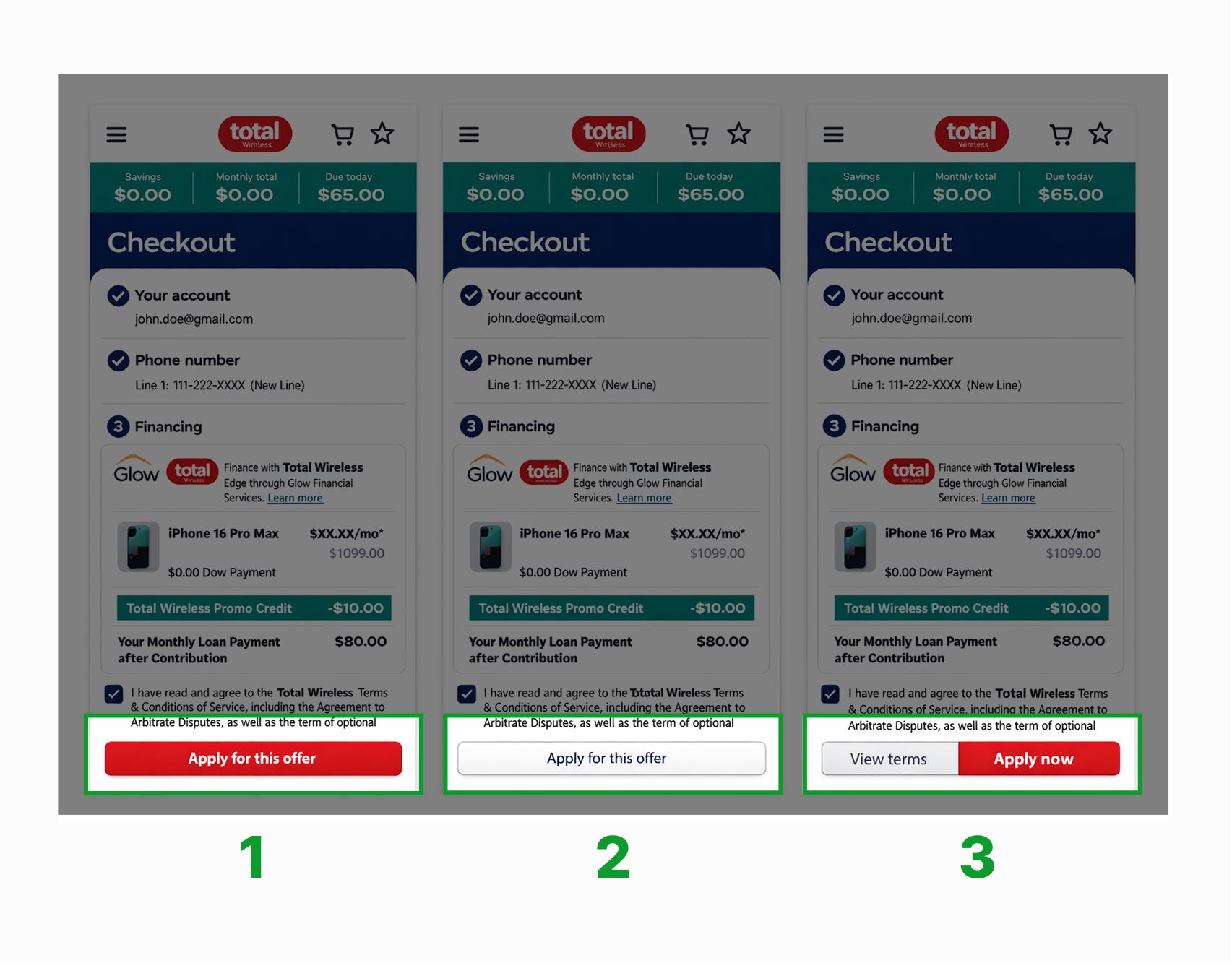
Despite the AI integration challenges, the core design work successfully delivered a competitive FWA onboarding and checkout experience through traditional, proven design methodologies. This case study demonstrates that organizational technology adoption decisions benefit from rigorous utility assessment rather than process-driven implementation.